 Counter-Strike 2
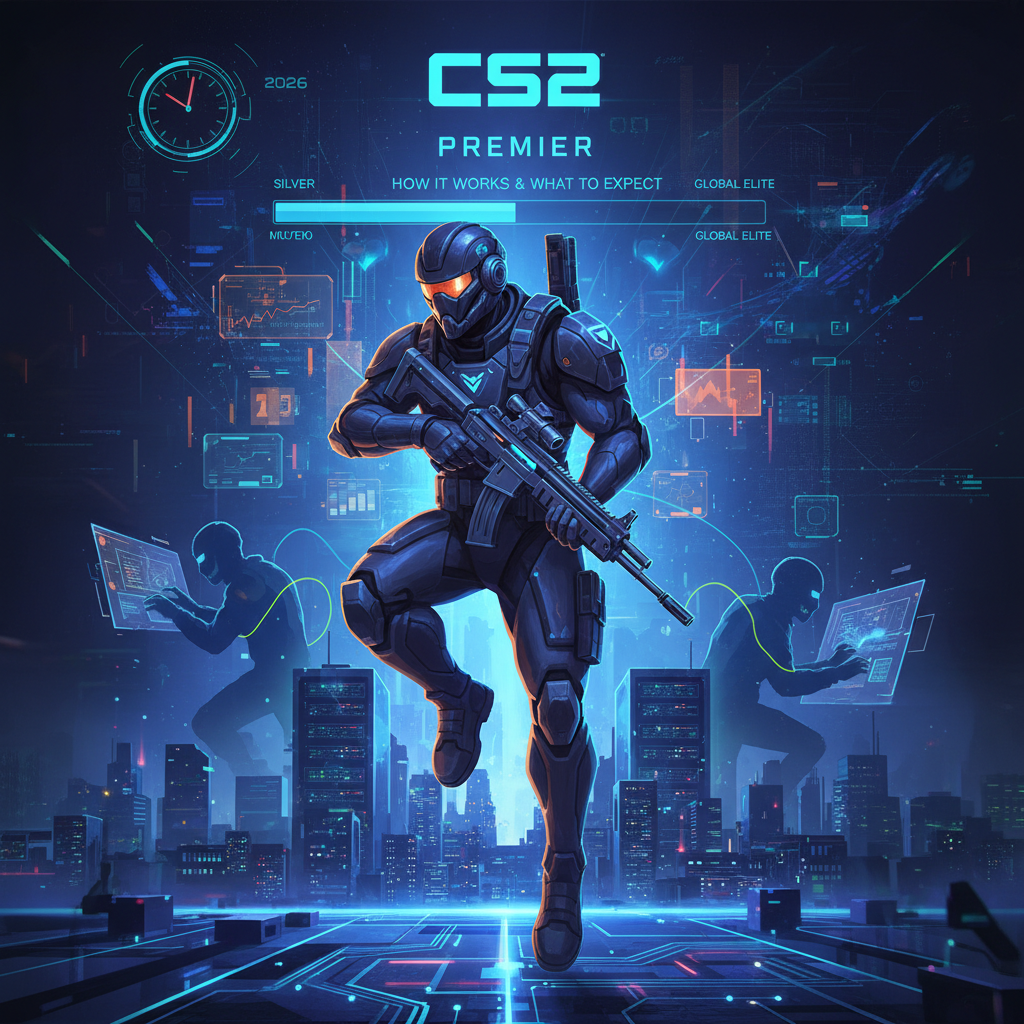
You want your CS Rating up without eating 200 matches of tilt-queue. That’s the whole pitch, and this is the real cs2 premier boost explained breakdown you wish someone handed you before you dropped money on one.
Last updated: April 2026, patch Animgraph 2 Beta.
What is a CS2 Premier boost, in plain words?
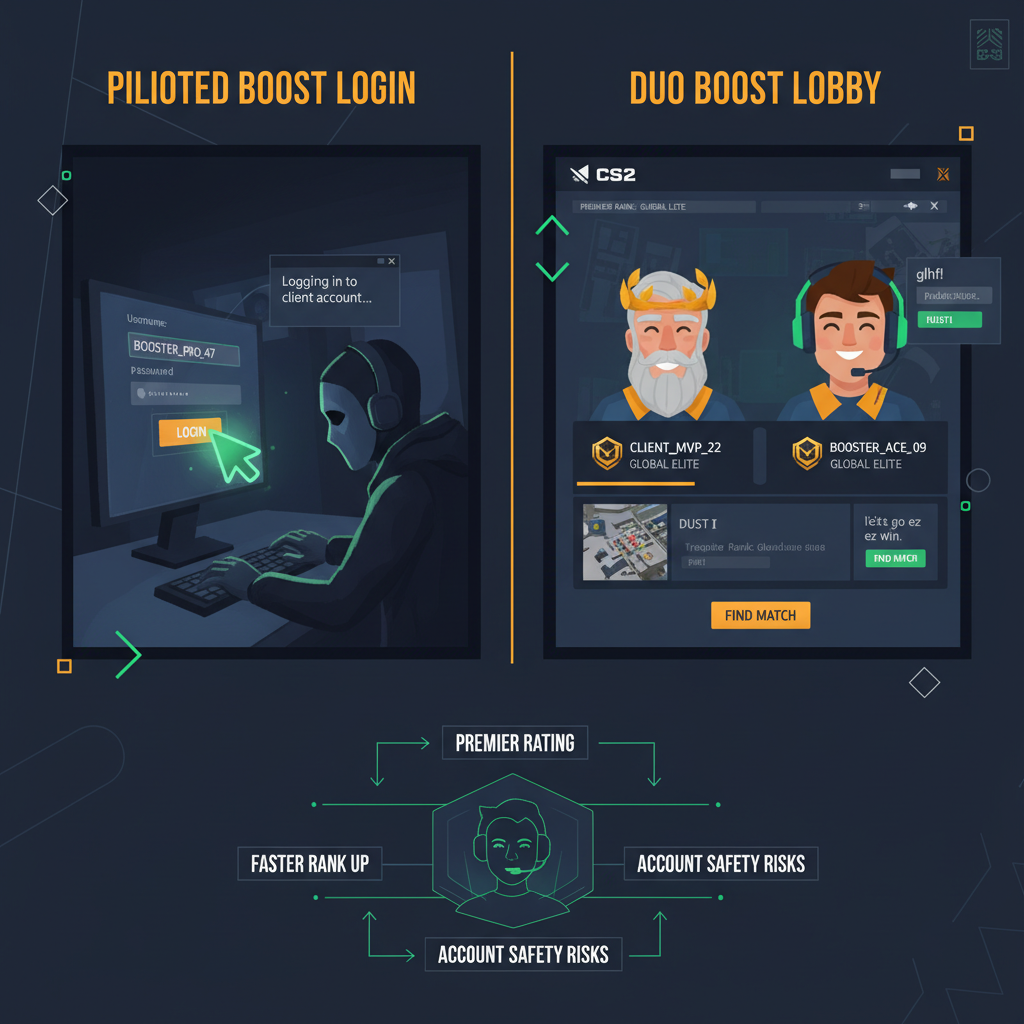
CS2 Premier boost explained simply: you pay a high-rated player to raise your CS Rating, either by logging into your account (piloted) or queuing with you (duo). Boosters climb through Valve’s 1,000 to 30,000+ ELO ladder faster than you could solo, locking in a target rating before the season rolls.
The service isn’t new. It’s the same boost model that ran through CS:GO’s old Global Elite grind, just ported to the numerical rating Valve switched to when Premier dropped. What changed is the math. Your rating now moves in chunks of roughly 100 to 300 per match depending on opponent ELO, per the Dexerto rating breakdown, so a booster’s win streak converts to visible points immediately.
How does CS2 Premier boosting actually work behind the scenes?
You pick a current rating, a target rating, and a mode. The service matches you with a booster whose own rating sits well above the target. On piloted, they log into your Steam account and queue solo until they hit your number. On duo, you both queue together and they carry the rounds.
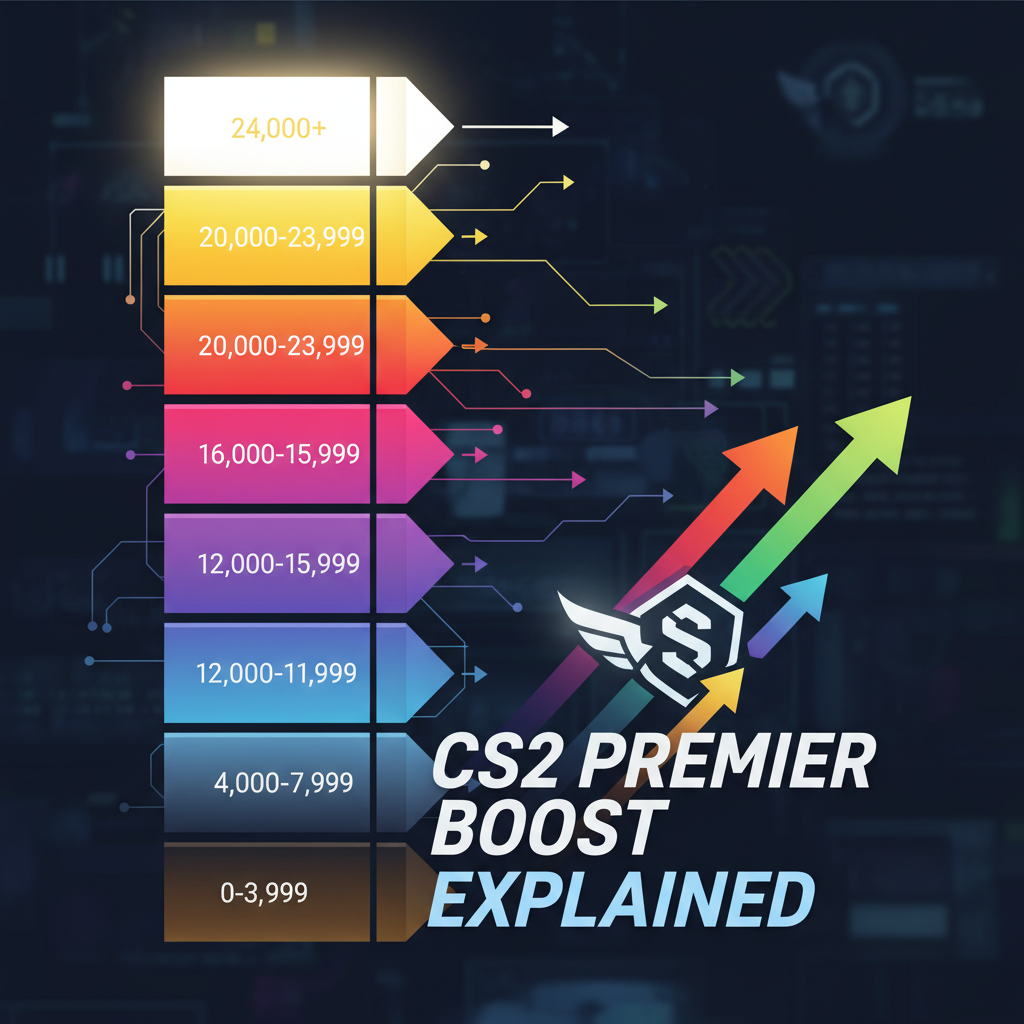
Two things matter under the hood. First, placements. If you haven’t finished your 10 placement matches, you have no CS Rating at all, so most services offer a “placement package” that runs those 10 before the real climb starts. Second, the color boundaries. According to PCGamesN’s rank guide, promotion and relegation matches only trigger at every 5,000-point mark (6,500, 11,000, 14,500, 18,000, 20,000). Boosters grind hard right before those walls because a loss there drops you back a full color.
I hit 14,300 last season and stalled for 60-plus matches, most of them throw-fests where my Mirage duo queue kept getting one-tricks who’d int B every single round. Bought a duo boost to push me past 15,000. It took 9 games. Would’ve taken me another month solo.
Piloted vs duo CS2 boost service: which one fits you?
Short version. Piloted is faster and cheaper. Duo is safer and you actually learn.
Piloted suits the player who wants the rating badge and doesn’t care how it got there. Booster opens Steam, plays 3 or 4 matches a night, done in a week. The downside: Steam logs logins by IP, so if you’re in Toronto and your booster is in Warsaw without a matched VPN, you could eat a 7-day community cooldown. A proper CS2 Premier boost service handles VPN routing as default, not as an upsell.
Duo is the one I recommend to anyone who still wants to improve. You queue with the booster, you hold angles, they carry mid and late rounds. Your aim stays tuned. You also pick up comms habits from someone who’s sitting in red tier, which is worth more long-term than the rating itself. Honestly, below 10,000 I’d tell you to skip boosts entirely and just grind — the climb is fast enough that you’ll learn more than you save.
What rating jumps are realistic in 2026?
Depends on where you start. The rating distribution is brutal at the top end. Per Total CS’s 2026 distribution data and the eloboss tracker, over 99% of the Premier playerbase sits below 20,000, and less than 0.01% of accounts ever see 30k. That’s not a boost limitation. That’s just the ladder.
Realistic targets I’ve seen stick:
- Gray to Light Blue (1,000 → 7,000): 3 to 5 days piloted, tiny risk of pushback.
- Light Blue to Blue (7,000 → 12,000): 5 to 8 days, the sweet spot for value.
- Blue to Purple (12,000 → 15,000): 7 to 10 days, expect a promotion-match stall.
- Purple to Pink (15,000 → 18,500): 10 to 14 days, prices jump sharply.
- Pink to Red+ (19,000+): match-by-match pricing only. Win rates crash up there.
My buddy went from 9,200 to 14,800 in about 11 days running piloted on a service that scheduled sessions around patch timing. The Animgraph 2 Beta update that landed April 2, 2026, actually made the climb slightly easier for boosters because peeker’s advantage tightened, per the official CS2 patch notes on Fandom. Aim-heavy boosters love that.
Is a CS2 boost service safe right now?
Mostly. There are three risk buckets and you should know all three before you buy.
VAC bans. Not happening. Boosting isn’t cheating. Valve’s VAC targets hooks, injectors, and modified binaries, not account sharing. No service in the last three years has been tied to a VAC wave.
Steam cooldowns. These are real. Login from a foreign IP without a VPN, and Steam can flag the account. The fix is booster-client VPN matching, which any legit service runs as standard. Ask before you pay.
Account theft. The one that actually matters. You’re handing over Steam credentials to a stranger. Use a throwaway email, enable Steam Guard mobile (the booster logs in through your confirmation), and never, ever share your main Steam password if it’s reused anywhere. A solid CS2 Premier ranking guide will tell you the same.
One more thing. Steam now shows Premier match history publicly on some community sites, so if you buy a boost and then tank in your next 5 solo games, your friends will notice (the wallhack-looking smurfs from 20k+ who queue down are a different story, but a visible 3,000-rating swing is loud).
How much should a CS2 boost actually cost in 2026?
Ballpark. Around $0.04 to $0.08 per CS Rating point below 15,000, climbing to $0.15+ per point between 18,000 and 20,000. Duo runs roughly 30 to 50% more than piloted because the booster is capped by your reaction speed.
If a service quotes you $20 for a 5,000-point push, that’s a scam or a hijack waiting. The labor cost alone (6+ hours of a 20k+ player’s time) doesn’t math out. Walk away.
FAQ
Is CS2 Premier boosting bannable?
Valve doesn’t hand out VAC bans for boosting itself. The risk is a Steam community cooldown if someone reports weird IP logins, so a decent service uses VPN matching and spreads sessions over days.
How long does a typical CS2 boost take?
A 3,000-rating jump takes 3 to 7 days on piloted if the booster runs 2 to 4 hours per session. Duo runs 1 to 2 weeks for the same target because you play at your pace.
Do I need to finish placements before I buy a boost?
Yes. Premier gives you zero rating until you finish your 10 placement matches, so every order starts from a real number. Most services will run placements as an add-on.
What’s the highest CS Rating boosters will push?
Most cap at around 25,000 because red and yellow tiers are thin and win rates collapse. Pushing past 28,000 is rare and usually priced per match, not per point.
Will my teammates notice I’m being boosted?
In duo, almost never. In piloted at higher ratings, lobbies smell it fast if your aim is inconsistent, which is why good services use Prime-only accounts and dodge Faceit-style stacks.
Bottom line
A CS2 boost is a shortcut, not a fix. Done right through a legit CS2 Premier boost with VPN matching and a duo option, you get your rating without the account risk. I’d still tell anyone under 10,000 to grind instead, because the climb is cheap in time and expensive in ego to outsource.